Traditional Thai Tattoo Vs Bamboo Tattoo

Traditional Thai Tattoo vs Bamboo Tattoo

Thailand Bamboo Tattooing
Western media made up the term Bamboo Tattoos when reporting on traditional Thai Tattoos (Sak Yant) confusing Thai Tattoos with other Cultures who use Bamboo

The Traditional Thai tattoo is often misunderstood by travelers who often search for “Bamboo Tattoos” instead. While both are commonly associated with hand-poked techniques, they are not the same thing.

In recent years, the term “bamboo tattoo” has gained popularity among travelers and tattoo enthusiasts seeking a mystical and authentic experience in Southeast Asia, particularly in Thailand.

Promoted as an ancient Thai technique using bamboo sticks, this form of tattooing is often glamorized by travel bloggers, and tattoo studios websites. But here’s the truth: Thailand bamboo tattoos, as they popularly known in the West, do not exist in traditional Thai culture (4) (3).

This blog post aims to debunk the widespread myth of the so-called bamboo tattoo, shed light on the true history and practice of traditional Thai tattooing, and clarify the origins of this misnomer.

Traditional Thai Tattoo vs Bamboo Tattoo: The Key Differences

1. Cultural Meaning:   A traditional Thai tattoo (Sak Yant) is sacred and tied to spiritual beliefs. A bamboo tattoo is typically decorative and lacks ritual significance.

2. Tools Used:  Traditional Thai tattoos use a metal rod (khem) with a needle tip. Bamboo is not historically used in Thailand due to its impracticality.

3. Who Performs the Tattoo:  Sak Yant is applied by trained spiritual practitioners, while bamboo tattoos are usually done by commercial tattoo artists.

4. Purpose:  Traditional Thai Tattoo: Protection, blessings, spiritual power Vs Bamboo tattoo: Visual design or souvenir

Category Traditional Thai Tattoo (Sak Yant) Bamboo Tattoo
Definition A sacred spiritual tattoo rooted in Thai culture and Buddhism A modern tattoo style marketed to tourists using hand-poke technique
Origin Centuries-old Thai spiritual practice Modern trend (popularized in the last 20–30 years)
Purpose Protection, blessings, spiritual power Primarily aesthetic or souvenir
Who Performs It Monks or Ajarns (spiritual masters) Commercial tattoo artists
Technique Hand-poked using a traditional metal rod (khem) Hand-poked using metal needles attached to a rod
Use of Bamboo Not traditionally used Often marketed as bamboo, but usually not actual bamboo
Spiritual Rituals Includes chanting, blessings, and activation rituals No spiritual rituals involved
Cultural Significance Deep cultural and religious meaning Zero cultural significance
Designs Sacred geometry, yantra patterns, ancient scripts Any design, including modern or copied Sak Yant styles
Authenticity Considered an authentic Thai tradition Considered a modern interpretation for tourists

The Origin of the Thailand Bamboo Tattoo Myth

The term Bamboo Tattoos has only recently (around year 2003) entered into awareness via popular tourist culture (5).   Very quickly the term was used associated with cultural Sak Yants and displayed by Tattoo Shops.   Over the years travel bloggers getting Fake Sak Yants from Tattoo shops repeating this myth it became common internet lore that Thailand’s Bamboo Tattoo represented authenticity and tradition of the Sak Yant tattoos.    So common, that today some tattoo artist will genuinely claim to believe and promote the ancient connection narrative when providing Hand Poked Bamboo Tattooing services. 

A claim that is hard to believe since as early as 2011 NPR radio reported on this trend of Fake Bamboo Tattoo Sak Yant and it’s legalities concerning disrespect to Thai Culture.  Many Tattoo Artists stating others do it for money (9).  “There are some tattoo artists who only care about money,” confides Pongsuk Tammaget, who runs the Max Body Tattoo Parlor. “They heed no rules or regulations. If the law is aimed at them, that’s fine by me. If I see foreigners with tattoos in the wrong place, we notice it. It’s not good, and it offends Thai people’s sensibilities.”

Most older Thai people know (including many Tattoo Artists)  know the only time a  person would receive a tattoo using a Bamboo Needle was in jail (1).  Thai people clearly understood that real Sak Yant Masters have always had and used a metal rod called a ‘Khem’ (1), (6). Additionally Thai people know the Sak Yant must be preformed by a Sak Yant Master (7) who can provide a blessing to activate the design and will not get a Sak Yant Tattoo from a tattoo artist

There is a big difference between a genuine Sak Yant Tattoo which is created and blessed by a holy man trained in magical arts, and the meaningless Bamboo Tattoo copies that tattoo artists include in their catalog of designs (8).  We hope to educate tourist coming to Thailand to seek out an authentic Sak Yant Master for a real Sak Yant Experience and not embarrass themselves by having a meaningless and disrespectful counterfeit of Thailand’s Cultural heritage displayed on their bodies.

Tools of the Traditional Thailand Tattoo Trade: Metal, Not Bamboo

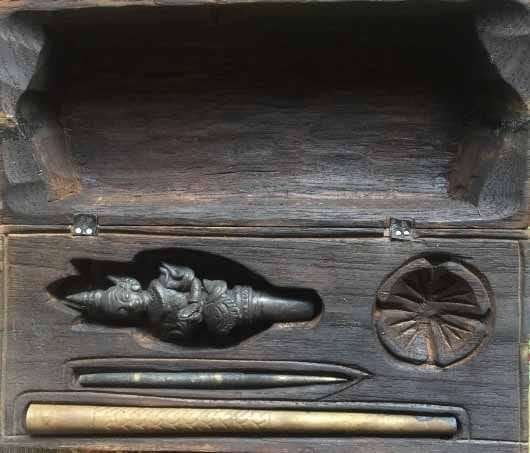
The Traditional Thai tattooing tool, known as a “mai sak” (ไม้สัก), is not made of bamboo. Instead, it is typically crafted from metal or wood and finished with a fine steel needle tip.(6) (7). The use of bamboo needle would be impractical due to its porous structure and inability to hold ink, and lack of durability and strength when cut to a point.

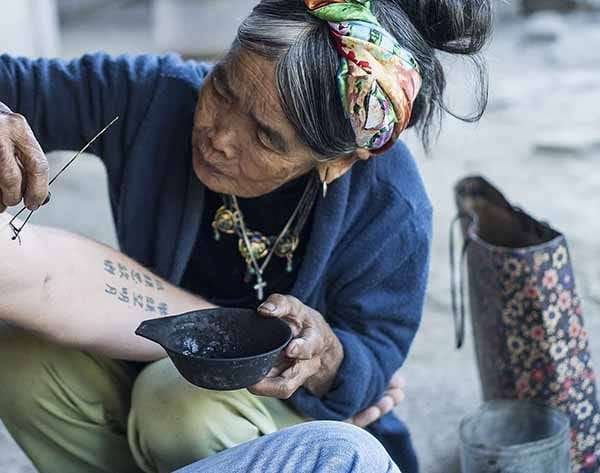
Traditional Thai tattooing employs a long, thin metal rod with a needle at the tip, allowing for precision and depth control. These rods, sometimes passed down through generations, are meticulously maintained and often sanctified. (6) (7)

Contrary to the Thailand bamboo tattoo myth, the precision required for the traditional Thai tattoos would be nearly impossible to achieve with a bamboo stick. Bamboo is brittle, prone to splinters, and any needle fashioned would be incapable of holding the ink.  Bamboo Needles and Tattooing is just inefficient for safe and intricate tattooing. Even in the very rare long past occasion a rural Ajarn is forced to use Bamboo, they preferred bicycle spokes instead as the Bamboo stick would only last an hour before needing to be thrown away.

Some tattooing may use a wooden handle for the rod, but this still does not equate to bamboo being the primary material. The conflation of “wooden” with “bamboo” has only added to the confusion.

Metal has been available since the bronze age (5000 years ago), anyone with the smallest knowledge of history would question the need to use Bamboo Needles to make Tattoos while Monks used metal utensils to eat

Why Bamboo Tattoos Became Popular

Traditional Thai tattoos have captured the imaginations of travelers and spiritual seekers from all over the world. These sacred geometric designs, to offer protection, power, and blessings, are deeply rooted in Thai and Southeast Asian spiritual traditions. But as demand for these tattoos has skyrocketed, so too has a troubling trend: the rise of replica (fake) Bamboo Tattoo Sak Yants.

So why do some tattoo artists in Thailand create fake Sak Yants? Let’s explore the reasons—and how to avoid falling into the trap.

1. Tourist Demand Without Understanding

Many tourists come to Thailand seeking a Traditional Thai Tattoo Sak Yant as a souvenir of their travels, often inspired by celebrities like Angelina Jolie. Unfortunately, not everyone understands the spiritual and cultural weight these tattoos carry. To meet the demand, some tattoo shops offer decorative versions of Sak Yant without any ritual, blessing, or authenticity.

In other words, they give the customer what they want—something that looks real (for the tourist at least), even if it’s spiritually meaningless.

Bamboo Tattoo Shop near bars2. Lack of Qualified Ajarns

Traditionally, Sak Yants (The real Traditional Thai Tattoo) are performed by Ajarns (spiritual masters) or Buddhist monks trained in sacred geometry, ancient scripts, and magical incantations (kata). These practitioners undergo years of spiritual discipline. But genuine Ajarns are few, and the training is rigorous. As a result, many commercial tattoo artists imitate the style without the sacred knowledge behind it.

For the Tattoo Artist it’s much easier, and more profitable, to copy a design than to become a true practitioner.

3. Profit Over Principle

There’s no denying that Traditional Thai Tattoos, Sak Yants have become big business. Tourists are often willing to pay top dollar for what they believe is an “authentic Thai experience.” For some tattoo shops, this is simply a money-making opportunity. They may replicate popular Yant patterns, skip the chanting and blessings, and market it as the real deal.

This commercialization undermines the spiritual significance of Sak Yant and turns the sacred traditional Thai Tattoo into a gimmick tourist commodity.

4. No Spiritual Empowerment

A real Sak Yant is more than ink, it’s a spiritual ritual. Without the proper blessings, chants, and permissions from the spirits or deities invoked, the tattoo is just a design. Think of it like a religious artifact: a cross or Buddha statue is not sacred unless it’s been blessed.

Tattoo artists who skip this process are offering an empty shell as they don’t have the knowledge or personal conduct ethics to do any better.


The growing popularity of Traditional Thai tattoos has sadly led to a wave of inauthentic practices. While it’s understandable that artists want to meet demand, faking a sacred tradition does a disservice to the culture it comes from, and to the people who receive it under false pretenses.

If you truly respect Thai culture and want to honor the spiritual depth of Sak Yant, take the time to find a real Ajarn, understand the meaning of the tattoo, and receive it in the traditional way.

Your tattoo will mean so much more when it’s not just ink, but a blessing for life.

The Real Traditional Thai Tattoo - The Sak Yant

The authentic form of traditional Thai tattooing is called Sak Yant (สักยันต์), which translates to “tattoo yantra..  These tattoos are deeply spiritual, often performed by Buddhist monks or Ajarns (respected spiritual tattoo masters). The designs are based on sacred geometry, ancient scripts, and spiritual beliefs, intended to provide protection, strength, and blessings.

Sak Yant is not merely a form of body art but a ceremonial and spiritual practice. The process typically includes chanting, offerings, and specific rituals that connect the recipient to the spiritual realm.  This tradition dates back centuries and is rooted in Brahmanism and Theravada Buddhist Belief.

Should You Get a Traditional Thai Tattoo or Bamboo Tattoo?

If you are seeking a meaningful cultural and spiritual experience, a traditional Thai tattoo (Sak Yant) is the authentic path.

If you simply want a tattoo using a hand-poked technique for aesthetic reasons, a bamboo tattoo may suit your needs, but it should not be confused with Thailand’s sacred tattoo tradition.

Read More Articles

  • All
  • Bamboo Tattoo
  • Sak Yant Tattoo
  • Tattoo Shop
Load More

End of Content.

Sak Yant Foundation USA
Author www.bambootattoos.com. No Copyright - feel free to use any text or images

Academic and Historical References

(1). Thai Tattoos, the symbolic lines of faith  National Geographic. Nov 4 2020. https://ngthai.com/cultures/31619/thai-traditional-tattoos

(2) Why you don’t Get a Bamboo Tattoo at a Tattoo Shop sakyantchiangmai.com Oct 2022 https://sakyantchiangmai.com/sak-yant-bamboo-tattoo/

(3) Study of Thai and Japanese Tattoo. 1996 Nantchaya Mahakhan Burapha University, Faculty of Humanities and Social Sciences   https://buuir.buu.ac.th/xmlui/handle/1234567890/549

(4) Communication and Perception of the Meaning of ‘Tattoos’ in Contemporary Thai Society’,   Faculty of Communication Arts, Chulalongkorn University, by Suksan Kamolsantiroj,   2005     https://cuir.car.chula.ac.th/handle/123456789/8025

(5) What is a Bamboo Tattoo. Sak Yant Chiang Mai  2023   https://sakyantchiangmai.com/bamboo-tattoo-thailand/

(6) Tattoo Culture in Lana  Sept 6 2022. Princess Maha Chakri Sirindhorn Anthropology Centre. Phudech Saensa  https://www.sac.or.th/portal/th/article/detail/371

(7). Sak Yant tattooing as Thai soft power. Department of Public Administration Faculty of Political Science Ramkhamhaeng University.  Krissada Promvek. And Prachaya Chumnaseaw 2024.  http://www.hurujournal.ru.ac.th/journals/35_1719810573.pdf

(8) Bamboo Tattoo Bangkok. Sak Yant Bangkok 2024. https://sakyant-bangkok.com/bamboo-tattoo-bangkok/

(9) Thailand To Tattoo Tourists: Think Before You Ink NPR Radio June 20, 2011

(10) Pansa Khrueaklai and Noppadol Inchan, 2002, p. 73)

(11) Chuanphit Naphatasaai (editor), Dhammatharo Achariyanuson, (cited), page 49.

(12) Book The Brave One. (Phra Athit Attharo and Phra Maha Wirot , 2566)

(13) Tourist Bamboo Tattoo vs Real Sak Yant. Youtube Video  https://www.youtube.com/watch?v=-HogMIhYYz8

(14) The Story of the Bamboo Tattoo Needle. Thai Tattoo Chiang Mai.  https://thaitattoochiangmai.com/2016/08/28/bamboo-sak-yant-needles/

(15) Thailand To Tattoo Tourists: Think Before You Ink NPR Radio June 20, 2011

Previous Post

All materials in this website are not copyrighted!  This information is freely available for sharing and distribution